High Island, Texas: World-Class Birding at the End of the Bolivar Peninsula
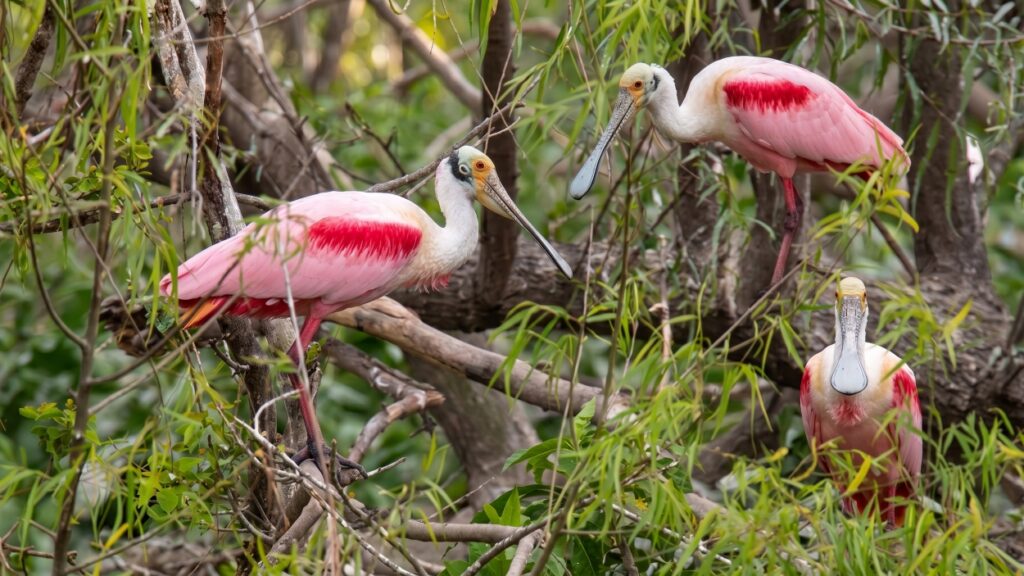
High Island, Texas sits about 10 miles east of Gilchrist at the far end of the Bolivar Peninsula, and every spring it becomes one of the most closely watched migration stopovers in North America. The town itself is tiny. What draws people here is what happens in a handful of wooded sanctuaries during migration season.
Here is what makes High Island worth the drive.
Why High Island Matters
High Island sits on a salt dome that raises it about 38 feet above the surrounding marsh, the highest point on this stretch of the Texas coast. That small rise in elevation is enough to support live oak trees and dense woods in an area that is otherwise flat coastal prairie.
For migratory songbirds crossing open water from Central America each spring, this patch of trees is often the first solid ground they reach after an overnight flight of 600 miles or more. Exhausted, they drop into the nearest cover they can find. That cover is High Island.
The Sanctuaries
Houston Audubon manages the two most visited sites, Boy Scout Woods and Smith Oaks, along with two additional smaller sanctuaries. A fifth sanctuary in the area is managed separately by the Texas Ornithological Society. Together, these five sites make up the core of High Island birding.
Smith Oaks
Smith Oaks is the largest of the sanctuaries at 177 acres, with woods, wetlands, prairie, and several ponds. Its rookery, in the middle of Claybottom Pond, is a major nesting and roosting site for herons, egrets, and Roseate Spoonbills. The Kathrine G. McGovern Canopy Walkway puts visitors at eye level with the treetops, which is where most of the migrating songbirds spend their time.
Boy Scout Woods
Boy Scout Woods covers 60 acres of woods, coastal prairie, and wetlands. It has extensive boardwalks, which make it one of the more accessible sanctuaries for visitors with mobility limitations. Volunteers staff the site daily during peak migration.
When to Visit
Spring migration runs from March through May, but the narrow window between April 20 and May 5 is generally considered peak season for both the number and variety of birds passing through.
Weather plays a bigger role here than the calendar. A north wind or a storm system near the coast tends to force migrating birds to land, sometimes producing a dramatic event birders call a “fallout,” where hundreds of birds appear in the woods at once. Clear skies and a south wind have the opposite effect, since birds ride those winds further inland and skip High Island entirely.
Afternoons are often more productive than mornings. Birds crossing overnight typically arrive at the coast in the early to mid-afternoon.
Visiting Information
Admission
The High Island sanctuaries are open daily, year-round. Admission is charged to help fund maintenance of the sanctuaries. An annual patch, currently priced at $35, grants one person entry to all five sanctuaries for the full year.
Smith Oaks Entrances
Smith Oaks has two entrances. The Winnie Street entrance is open daily, dawn to dusk, all year. The Old Mexico Road entrance is open daily during peak spring migration and on weekends in the fall.
Getting There
From Houston, take I-10 East to the Winnie exit, then head south on Highway 124 to reach High Island.
From Crystal Beach or the rest of the Bolivar Peninsula, take the Galveston-Bolivar ferry, then continue east on Highway 87 along the coast.
Plan Your Stay
Casago Bolivar Vacations manages vacation homes in Gilchrist, about 10 miles from High Island, along with properties in Crystal Beach and Port Bolivar. A house on this end of the peninsula puts you close to the sanctuaries for early starts during migration season.
Browse homes across the peninsula
Frequently Asked Questions
When is the best time to visit High Island for birding?
Spring migration runs from March through May, with the peak window typically falling between April 20 and May 5. Weather conditions matter as much as timing. A north wind or a storm near the coast tends to bring the most birds down into the sanctuaries at once.
How much does it cost to visit the High Island bird sanctuaries?
The sanctuaries charge admission to fund maintenance. An annual patch, currently $35, grants one person access to all five High Island sanctuaries for a full year.
What is the best sanctuary to visit at High Island?
Smith Oaks and Boy Scout Woods are the two most visited sanctuaries. Smith Oaks is the largest, with a canopy walkway and a rookery known for nesting herons, egrets, and Roseate Spoonbills. Boy Scout Woods has extensive boardwalks and is staffed by volunteers during peak migration.
How far is High Island from Crystal Beach?
High Island is about 10 miles east of Gilchrist on Highway 87, making it roughly 20 miles from Crystal Beach. The drive continues along the coast road past Gilchrist to reach the sanctuaries.
Why is High Island good for birdwatching?
High Island sits on a salt dome that raises it about 38 feet above the surrounding marsh, allowing trees to grow where the rest of the coastal prairie cannot support them. For songbirds crossing open water during spring migration, this small patch of woods is often the first place to land after an overnight flight of 600 miles or more.
Recent Posts
All the Comfort of our Homes
Enjoy pools, hot tubs, outdoor kitchens, and more — all steps from the beach.