Seashell Hunting on the Bolivar Peninsula: What You'll Find and Where to Look
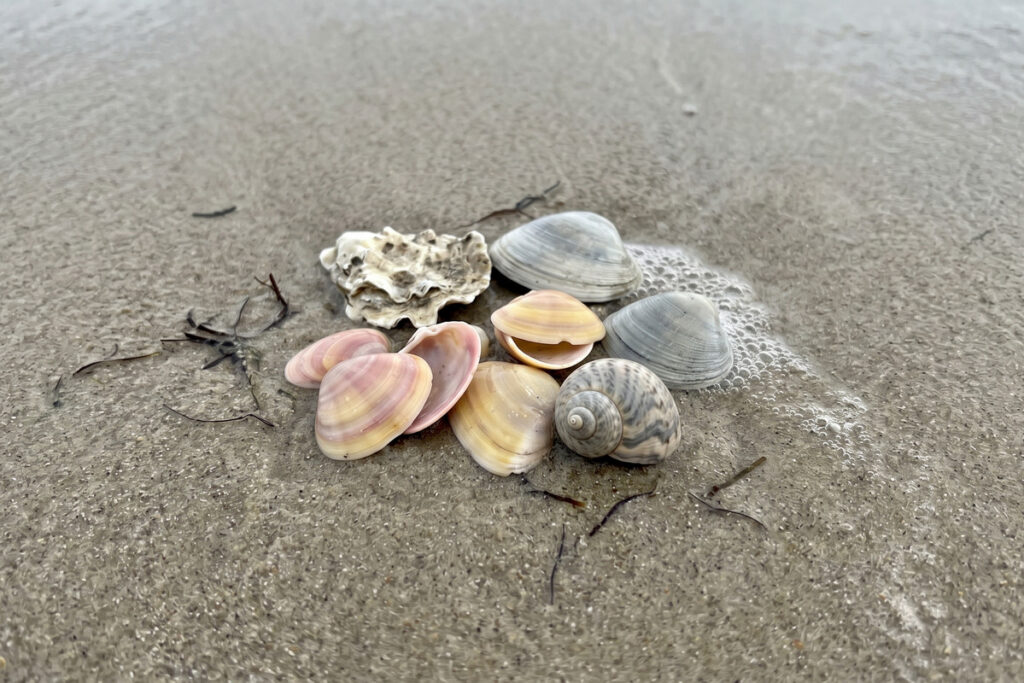
Seashell hunting on the Bolivar Peninsula is one of those activities that works for everyone: kids who want to fill a bucket, adults who want to slow down and walk, and dedicated collectors who know exactly what they are looking for. The beach runs for 27 miles, the material changes after every storm, and there is no entry fee.
Here is what you will find and how to find more of it.
What You’ll Find
Shells
The most recognizable find on the Bolivar Peninsula is the lightning whelk, the official state shell of Texas since 1987. It is tan or gray with darker stripes that run along the sides, and it opens on the left, the opposite of most spiral shells.
They range from thumb-sized to as large as your hand, and near the Stingaree Road beach access, they turn up in abundance. If you find a large, intact whelk, it is worth a closer look.
Beyond whelks, the peninsula produces moon snails, olive shells, auger shells, clams, and occasional sand dollars. Sand dollars are less consistent here than at some other Texas beaches, but they show up after stronger surf.
One rule worth knowing before you collect: no live mollusks. If a shell has an animal in it, set it back in the water. This applies to lightning whelks, sand dollars, sea urchins, and any shell with an occupant. Collecting empty shells requires no permit in Texas.
Shark Teeth
Shark teeth are a genuine find on Bolivar, and locals take them seriously. The best strategy is to work slowly along the shell hash: the dense rows of shell fragments and sediment that the tide deposits in lines along the shoreline. That is where the teeth concentrate.
Look for small, dark, triangular shapes in the mix. Bull shark teeth are among the most commonly found near the shell beds close to the water. The key is pace: slow down, scan in sections, and let your eyes adjust to what you are looking for.
Fall and winter are the best seasons, and low tide gives you the most material to work with.
Sea Glass and Sea Beans
Sea glass turns up along the high tide line and in the shell beds near the water. The peninsula has a reputation for it. Colors range from white and brown to the less common green and blue.
Sea beans are rarer but worth knowing about. These are seeds from tropical trees that fall into rivers, wash to sea, and get carried thousands of miles by ocean currents before landing on Texas beaches. The most commonly found varieties on Bolivar are the Hamburger bean and the Nickernut. Look for them along the debris line, the band of seaweed and material left by the last tide.
Where to Look
The Stingaree Road beach access is one of the most consistently productive spots on the peninsula. From Highway 87, turn toward the coast at Stingaree Road and head to the beach. Lightning whelks are plentiful here, and the shell beds close to the water are where shark teeth and sea glass tend to concentrate.
The Flats, at the west end of the peninsula, is another strong spot. It is a wide, open stretch of beach where shell deposits accumulate. Visitors report large shells here, some still connected in pairs, and occasionally hermit crabs that have moved in.
Beyond specific spots, the technique matters as much as the location. Walk the tide line, not the dry sand above it. The shells and teeth that wash in stay close to where the water last reached.
When to Go
Low tide is the best time to go. More beach is exposed, and the receding water often leaves material right at the surface before it gets covered again.
Early morning gives you the best selection and the fewest footprints. Whatever washed in overnight is still undisturbed.
After a storm is when the biggest finds happen. Stronger surf churns up material from further out and pushes it onshore. Fall and early winter storms tend to deliver the most.
Winter overall is a good season for seashell hunting. Fewer visitors mean less competition, and the material that accumulates during fall storms is still on the beach.
Plan Your Stay
Casago Bolivar Vacations manages vacation homes across Crystal Beach, Gilchrist, and Port Bolivar. All properties come fully furnished with beach gear included, so you can walk out the door and get started.
Frequently Asked Questions
What shells can you find at Crystal Beach, Texas?
The most common finds on the Bolivar Peninsula include lightning whelks, moon snails, olive shells, auger shells, and clams. Sand dollars appear less consistently but are found after stronger surf. The lightning whelk, tan with darker stripes and a left-opening spiral, is the official state shell of Texas and one of the most distinctive finds on the peninsula.
Can you find shark teeth at Crystal Beach?
Yes. Shark teeth are a known and documented find on the Bolivar Peninsula. They tend to concentrate in the shell hash along the tide line, particularly near the Stingaree Road beach access. Low tide, fall and winter months, and the time right after a storm give you the best odds.
Is it legal to collect seashells at Crystal Beach?
Collecting empty shells on Texas beaches requires no permit. Texas law does prohibit collecting live mollusks, including live lightning whelks and live sand dollars. If a shell has an animal still in it, put it back. Empty shells are fair game.
What are sea beans and can you find them at Crystal Beach?
Sea beans are seeds from tropical trees that travel thousands of miles by water before washing ashore on Texas beaches. On the Bolivar Peninsula, the most common varieties are the Hamburger bean and the Nickernut. Look for them in the debris line, the band of seaweed and material left by the receding tide.
What is the best time to go seashell hunting on the Bolivar Peninsula?
Early morning at low tide is the most productive combination. After a storm is when the biggest and most unusual finds tend to appear. Winter months offer the advantage of fewer visitors and more undisturbed material on the beach.
Recent Posts
All the Comfort of our Homes
Enjoy pools, hot tubs, outdoor kitchens, and more — all steps from the beach.