Crabbing at Crystal Beach: A Beginner’s Guide for Families
Crabbing at Crystal Beach is simple, cheap, and great for families. Here's what you need and where to go.
 Casago Bolivar local teamLocally owned on Bolivar Peninsula
4 min read
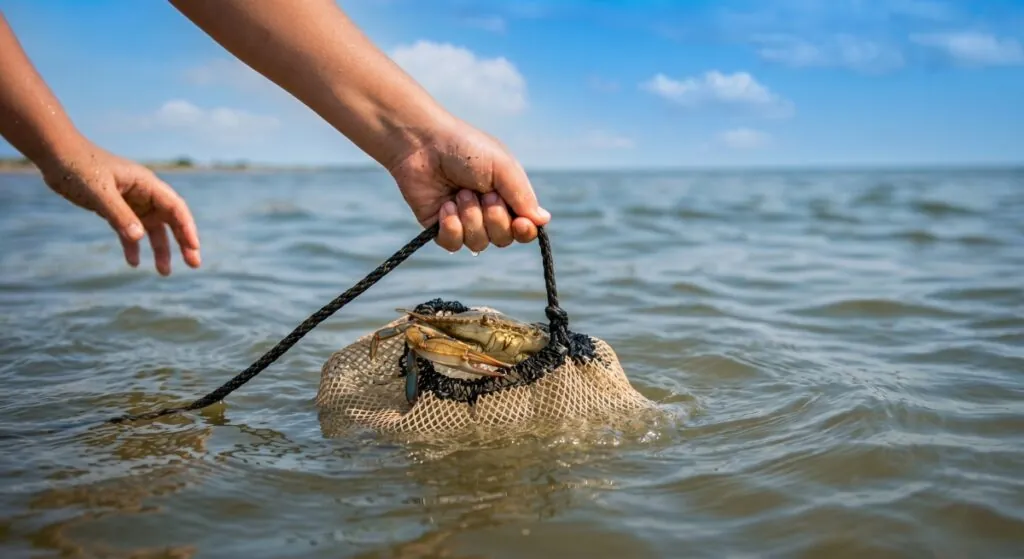
Crabbing at Crystal Beach is one of the easiest ways to fill an afternoon with kids. The gear is cheap, the technique takes minutes to learn, and the payoff, a bucket of blue crabs for dinner, makes it feel like more of an accomplishment than it actually is.
Here is everything you need to get started.
What You Need
A crab line. About 10 feet of strong twine with bait tied to one end. This is the simplest and most common setup for family crabbing.
A dip net. A net with a long handle, used to scoop the crab out of the water once it has latched onto the bait.
Bait. Chicken necks or fish heads work well and are easy to find at local bait shops or grocery stores.
A bucket or cooler. To hold your catch and keep the crabs alive until you are ready to cook them.
The entire setup costs very little, and none of it requires previous experience to use.
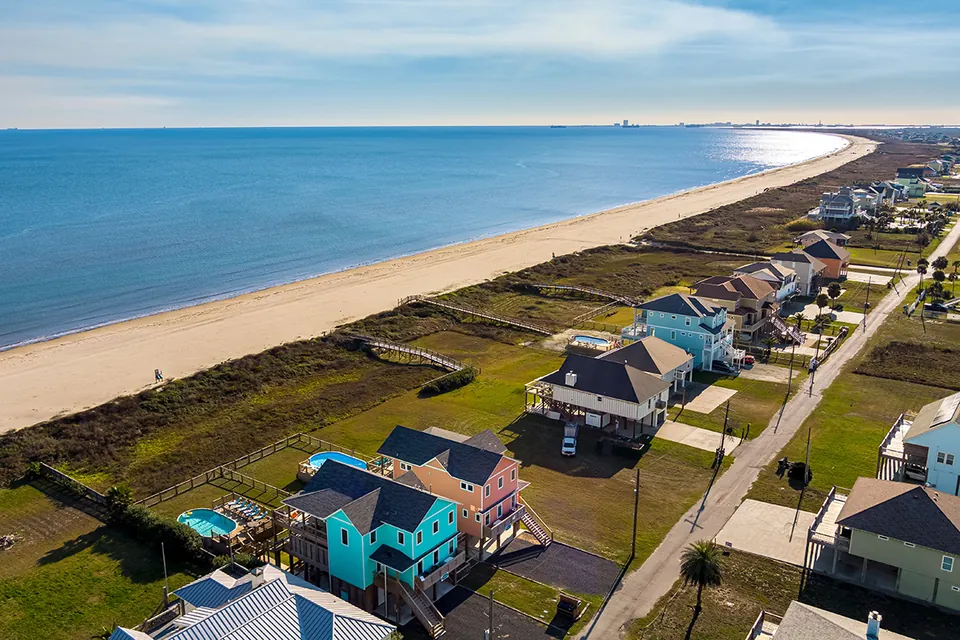
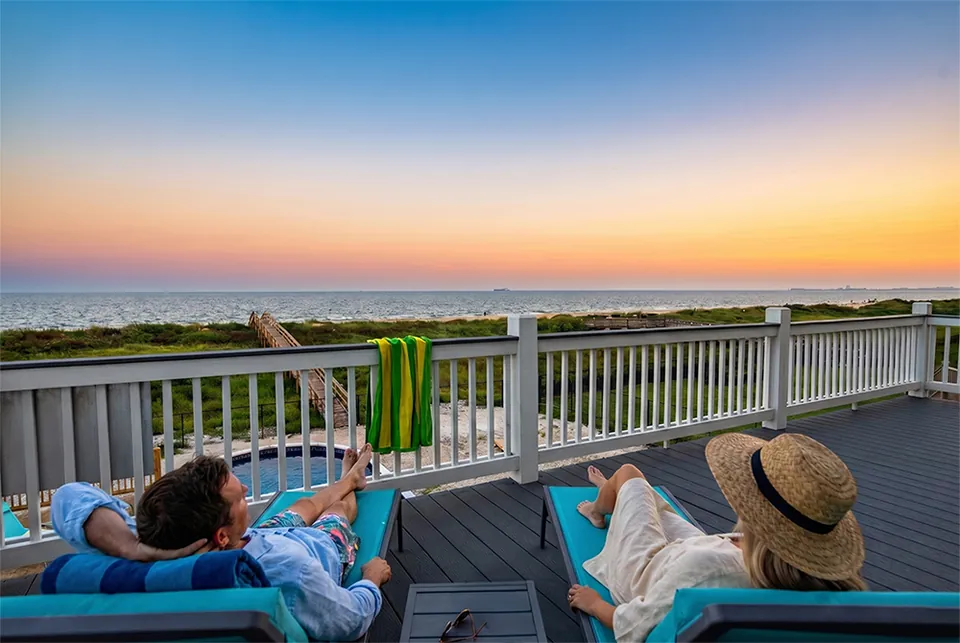
Where to stay: Crystal Beach vacation rentals, 59 beach houses, 12 of them on the beachfront, from $214 a night.
How to Crab
Tie your bait to the end of the line and lower it into the water near a dock, jetty, or canal. Blue crabs are drawn to the scent and will grab on with their claws.
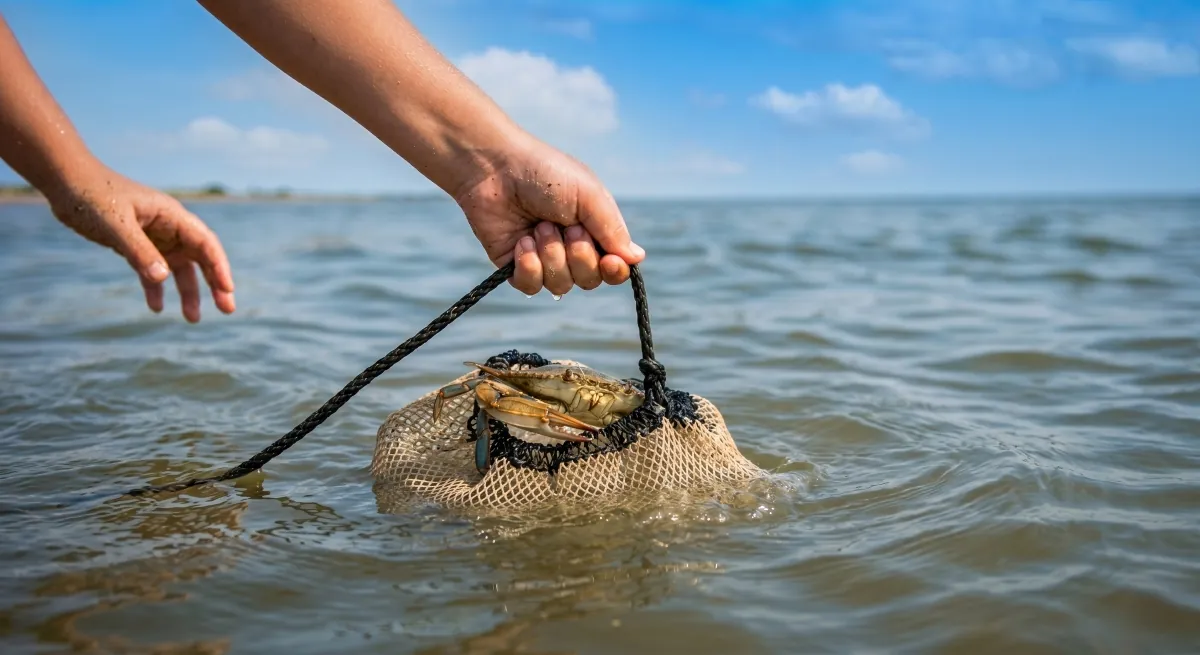
Once you feel a tug, pull the line in slowly and steadily. Sudden movements will spook the crab into letting go. As the crab nears the surface, scoop it up from below with the dip net rather than lifting it straight out of the water.
Blue crabs have a distinctive blue tint to their claws, which makes them easy to identify. Females have a broader, rounded apron on the underside of the shell; males have a narrower, T-shaped one.
Rules to Know
Texas requires blue crabs to measure at least 5 inches across the shell, point to point, to be legally kept. Anything smaller goes back in the water.
Female crabs carrying eggs, visible as an orange mass under the apron, must also be released, regardless of size.
Anyone crabbing for personal use needs a valid fishing license with a saltwater endorsement. This applies to anyone using a line, net, or trap. Licenses are available online through the Texas Parks and Wildlife Department or from local retailers on the peninsula.
Where to Go
The North Jetty, located at the end of 17th Street off Highway 87 about two miles from the ferry landing, is a well-known spot for both fishing and crabbing.
Canals and marshy areas along the bay side of the peninsula are also productive. Blue crabs favor calmer, brackish water over open surf, so the bay side generally outperforms the beach itself.
Summer is the most active season for crabbing on the peninsula, though crabs can be caught throughout the warmer months.
Cooking What You Catch
Rinse your crabs thoroughly before cooking. Some people remove the top shell, gills, and internal organs first; others boil the crab whole and clean it after cooking.
A large pot of boiling, seasoned water is the standard method. Once the crabs turn bright orange-red, they are done.
Plan Your Stay
Casago Bolivar Vacations manages vacation homes across Crystal Beach, Gilchrist, and Port Bolivar, many with full kitchens ready for cooking your catch the same day. A pot for boiling crab is a small thing to check for when booking, but it makes the day easier.