Kayaking on the Bolivar Peninsula: What to Know Before You Paddle
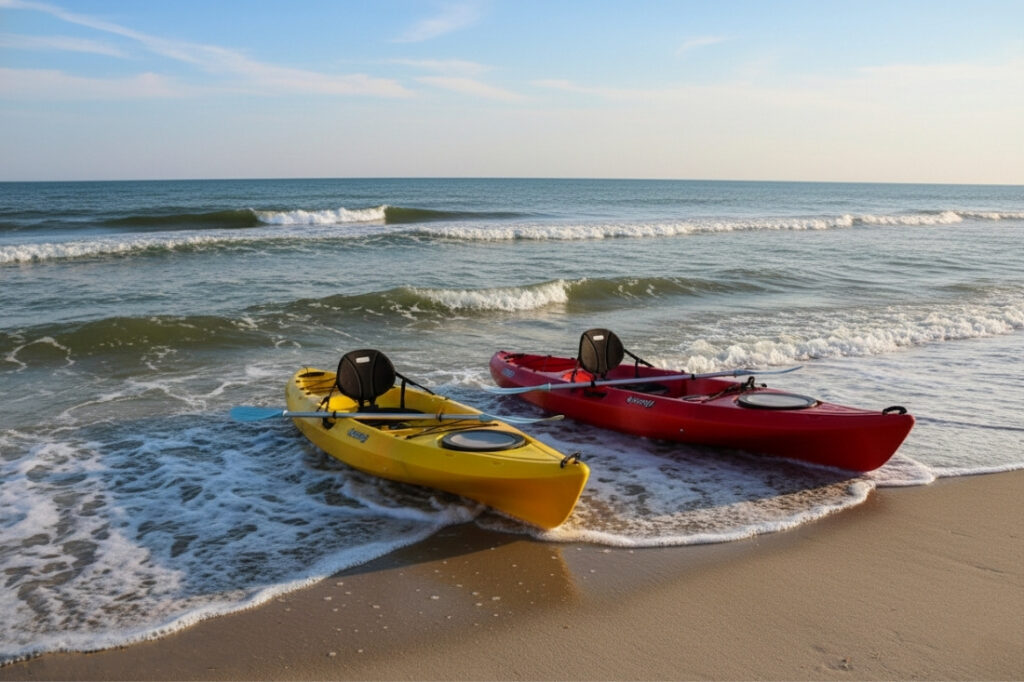
Kayaking on the Bolivar Peninsula is a different experience than kayaking somewhere with a put-in, a marked trail, and a shuttle back to the parking lot. There is no infrastructure here in that sense. What there is: miles of calm, shallow bay water on the north side of the peninsula, an estuary that supports more wildlife than most people expect, and almost no other kayakers on a typical morning.
The peninsula sits between the open water on its south side and Galveston Bay and East Bay on its north side. For kayaking, the bay side is the right side. That is where you go.
Why the Bay Side Works for Kayaking
The water on the bay side of the Bolivar Peninsula is shallow, calm, and protected. There is no surf, no swell, and on most mornings no wind to speak of until mid-morning. For someone paddling a kayak, these are ideal conditions, whether you are experienced or picking up a paddle for the first time.
The Galveston Bay estuary is the largest and most productive on the Texas coast. That productivity shows up in the shallows in a way that a boat motor or even a paddleboard can disturb. A kayak moves quietly enough that you end up alongside things rather than scattering them. Shorebirds that flush at the sound of an outboard will let a kayak drift within a few yards. Fish hold in the grass beds rather than darting off. The wildlife encounter is different at kayak speed.
The bay side also has a practical advantage: if you are staying in a property with a private pier or bay-facing deck, you have a natural launch point with no transport required. Get up early, carry the kayak down, and be on the water before 8 AM.
Bay vs. surf side: The south side of the peninsula, facing the open water, is not suitable for recreational kayaking except in very calm conditions. Wind, chop, and current make it unpredictable even for experienced paddlers. Stick to the bay side unless you have specific experience with coastal surf launches.
What You Will See from a Kayak
The bay-side habitat on the Bolivar Peninsula is a working estuary. What that means practically is that the shallows support an ecosystem visible at water level in a way it simply is not from a house or a boat.
Brown pelicans, great blue herons, roseate spoonbills, and egrets work the tidal flats and the edge of the grass beds. Reddish egrets, which are less common and distinctive for their erratic hunting behavior, appear regularly in the shallows along the peninsula. In spring, during migration season, the variety of birds visible from the water expands considerably.
Redfish and speckled trout are present in the seagrass and along the drop-off edges. If you are paddling for fishing rather than wildlife watching, a kayak is actually the preferred platform for sight-fishing in shallow water, where a quiet approach matters more than covering distance.
The best mornings are in May through October, when water temperatures are high and wildlife is most active. Early morning, before the wind picks up, is when the bay surface is flattest and the light is best for seeing into the water.
Renting a Kayak in Crystal Beach
Latitude 29.2 Surf Shop in Crystal Beach rents kayaks suited to the bay and to fishing. It is the primary local rental option on the peninsula. Call ahead to confirm availability and current rates before you plan your morning around it.
If you are staying in a property that includes kayaks as an amenity, verify the condition and the type before you arrive. Bay-sit kayaks and fishing kayaks handle differently from sea kayaks or recreational kayaks, and not all rental stock is maintained equally.
For paddleboarding, the same bay-side conditions apply. The flat water and minimal wind in the early morning make it accessible for beginners. The stability required for standing is easier to maintain in calm bay conditions than anywhere on the surf side.
Practical Notes Before You Go
Timing: Launch by 7 or 8 AM. The bay tends to stay flat until mid-morning, when thermal winds pick up from the south. By noon, conditions on the water are noticeably different than they were at sunrise.
Tide: An incoming tide pushes baitfish into shallower water and tends to activate feeding in both fish and birds. Outgoing tide concentrates fish along channel edges and cuts. Either works for wildlife watching. Avoid launching at dead low tide if you are in a very shallow area, as you may find yourself dragging the hull.
Sun and heat: The bay offers no shade. In summer, full sun exposure from the moment you launch is the default condition. Sunscreen, a hat, and a long-sleeve UPF shirt are not optional. Carry more water than you think you need.
Safety: Tell someone where you are going and when you expect to return. The bay is calm but expansive, and cell coverage in some areas is patchy. A whistle and a small dry bag for your phone are worth having.
Get Out on the Water
A kayak on the bay side of the Bolivar Peninsula at 7 AM is one of the quieter ways to spend a morning on the Texas coast. No engine, no crowd, nothing between you and the estuary.
Browse properties with bay-side access and private pier amenities at bolivarvacations.com, or call the team at (409) 255-0454.
Life Happens Here.
Quick FAQ
Is kayaking on the Bolivar Peninsula good for beginners?
Yes, on the bay side. The calm, shallow water of Galveston Bay and East Bay is genuinely beginner-friendly, particularly on weekday mornings when there is minimal boat traffic. The conditions are predictable and the water is shallow enough in most areas that standing up is an option if you capsize.
Where do you launch a kayak on the Bolivar Peninsula?
There are public boat ramps on the bay side of the peninsula at several points. If you are renting from Latitude 29.2 Surf Shop in Crystal Beach, they can advise on the nearest suitable launch point. Properties with private bay-side access offer the most convenient option.
What is the best time of year to kayak on the Bolivar Peninsula?
May through October offers the warmest water and most active wildlife. Early fall, September and October, is particularly good: water temperatures are still high, bird activity is strong, and the bay is quieter than summer weekends. Spring is excellent for migratory birds. Winter kayaking is possible on calm days but conditions are less predictable.
Can you see dolphins from a kayak on the Bolivar Peninsula?
Yes. Dolphins feed actively in the bay, and a kayak offers a quieter approach than a motorized vessel. Early morning on the bay side is the most reliable window. Let them set the terms of any encounter and avoid paddling directly toward a group.
Do you need a life jacket to kayak in Texas?
Texas law requires that a wearable personal flotation device be available for each person on a kayak. Children under 13 must wear one at all times on the water. For adults, it must be on board and accessible, though it does not have to be worn.
Recent Posts
All the Comfort of our Homes
Enjoy pools, hot tubs, outdoor kitchens, and more — all steps from the beach.