
The Real Cost of Managing Your Own Vacation Rental

I have a lot of respect for homeowners who try to self-manage their vacation rentals. It takes real commitment. And for some owners — particularly those who live close to their property and have the time, the systems, and the local contractor network — it can work.
But I want to have an honest conversation about what self-management actually costs, because most of the time, the math is not what people expect when they sit down and run it for real.
The Time Math Nobody Talks About
The most recent industry research on this is unambiguous: self-managing a vacation rental requires between 14 and 20 hours per week without significant automation. That’s not a part-time hobby. That’s a second job.
What does that time actually go toward?
Guest messaging from inquiry through checkout — responding to questions, sending instructions, handling issues
Pricing updates — monitoring competitors, adjusting for local events and demand shifts
Coordinating cleaning and turnover between stays
Handling maintenance requests — sourcing contractors, supervising work, following up
Managing listing optimization across platforms
Tracking financials and handling tax remittance
Review management — responding to guest feedback and soliciting new reviews
If you manage one property and your time is worth $50 an hour, those 14–20 weekly hours represent $36,400 to $52,000 in annual time cost. That’s before you’ve spent a dollar on actual management infrastructure.
The Hidden Dollar Costs
Time is the biggest cost most self-managers undercount. But there are real dollar costs too that don’t appear in any single line item:
• Dynamic pricing tools. If you’re using PriceLabs, Wheelhouse, or a similar platform, you’re paying $20–$100 per month, per property. If you’re not using one, you’re almost certainly underpricing peak nights and overpricing shoulder weeks — which industry data suggests costs the average self-manager 20–30% in annual revenue compared to data-driven pricing.
• Emergency contractor rates. When you’re managing your own property, you’re paying retail for every emergency call. Professional managers build volume-based priority relationships with contractors that reduce costs by 10–20% and dramatically cut response times. Emergency plumbers run $60–$600 per hour at retail. An HVAC failure in July can run $500–$3,000. Without priority relationships, you’re at the back of the line.
• Platform management and channel complexity. Managing one channel is doable. Managing Airbnb, Vrbo, Booking.com, and a direct booking engine with real-time calendar sync requires channel management software — another monthly cost, another learning curve.
• Guest experience gaps. Research shows that 77.9% of self-managing homeowners report the only way they welcome guests is via email. No welcome kit. No pre-stay messaging sequence. No post-stay follow-up campaign for repeat bookings. Every one of those gaps is a five-star review that didn’t happen and a repeat booking that went somewhere else.
What a Self-Manager Cannot Replicate
This is the part I want to be most direct about, because I think it’s where the self-management conversation usually skips a step.
Even a motivated, capable self-manager with PriceLabs and a good cleaning contact cannot replicate a two-team operating system:
• An in-house revenue team reviewing your property every single week — booking pace, gap-night strategy, competitive positioning, local-event demand signals. This is a full-time job, not a weekend check-in.
• An in-house marketing team that sends 1–3 targeted campaigns per month to a guest database you don’t own, runs dedicated pushes around holidays and local events, and actively fights to put your home in front of traveler demand. We call it the Power Couple: marketing and revenue working hand-in-hand, every week.
• A 30+ person local team on the peninsula — cleaners, inspectors, maintenance, housekeeping leadership — backed by 24/7 virtual support. The infrastructure behind a consistent 4.9+ rating.
• A centralized Homeowner Support function so when something goes sideways, you have one number to call and a same-day response, not a voicemail loop.
That’s not a software license. That’s a small company’s worth of operational capability, built over more than a decade on this coast.
The Revenue Gap
Here’s the single most important data point in this entire conversation.
AirDNA research shows that professionally managed properties earn 39% more in monthly revenue and achieve 43% higher ADR compared to self-managed listings, on average. Even accounting for management fees, many owners come out ahead with professional management when they run the full comparison — not just the fee percentage, but the total revenue differential.
Our own portfolio on the Bolivar Peninsula reflects this outperformance. In early 2026, even in the softest low-season stretch the Texas coast had seen in years, our portfolio’s January bookings ran 45% higher year-over-year — with 78% of those reservations booking at the same rate or higher than the prior year. That’s what happens when a full operating team plays offense in a down market.
The management fee is a real cost. But so is the revenue you’re not earning without the infrastructure behind your property.
When Self-Management Makes Sense — And When It Doesn’t
I’ll be straight with you. Self-management makes sense if you live within 30 minutes of your property, you own only one or two homes, you have a reliable local cleaning and maintenance network, and you genuinely have the time to respond to messages, adjust pricing, and handle issues consistently — including at 11:00 PM on a Saturday in July.
It becomes significantly harder if you live more than 30 minutes away, if your primary career demands real attention, if you’re starting to lose track of pricing adjustments and guest communications, or if your property is underperforming what comparable homes are earning in the same market.
The question worth asking isn’t “can I do this?” Most homeowners can. The better question is: is this the best use of my time, and is my property earning what it’s capable of earning?
If the answer to either of those is uncertain, I’d genuinely like to have that conversation with you. Bring your last 12 months of owner statements; I’ll run the comparison honestly.
Felipe Caldeira, CEO & Managing Partner, www.bolivarvacations.com | www.casagosanantonio.com
Why Julie and I Became Property Managers — And What That Means for Your Home
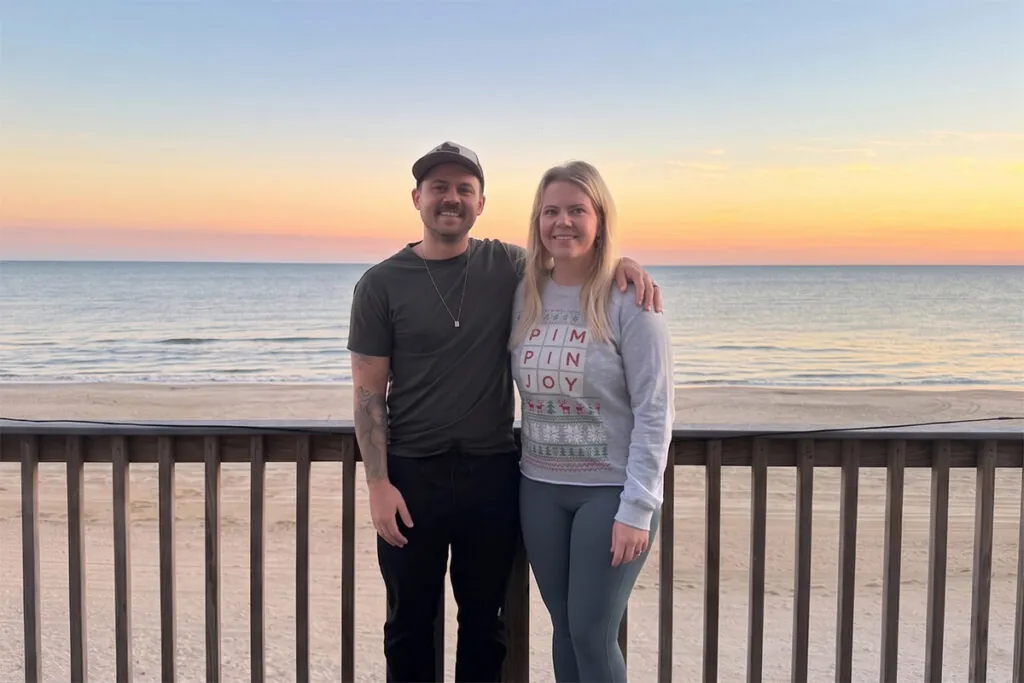
Before I became a property manager, I was an investor and a vacation rental owner — just like you. I know exactly what it feels like to hand over the keys to a valuable asset and then open a statement a month later wondering whether the numbers add up. I know what it feels like to watch a storm roll in from the Gulf and not be able to reach your manager on the phone. I know what it feels like to read a three-star review and realize nobody told you the AC was out during that stay.
That’s not a story I’m borrowing. That’s the version of ownership that made me want to build something different.
The Real Reason
People ask me sometimes why Julie and I left stable careers to run vacation rentals on the Texas coast. It’s a reasonable question. This business involves 24-hour emergency calls, complex logistics, difficult guests, coastal weather, and the constant pressure of managing other people’s most valuable assets.
The honest answer is: our three kids.
Ben, Oliver, and Sophie. They’re why Julie and I made the leap. We wanted to build something that would be theirs someday — a business with real roots, real relationships, and the kind of reputation that compounds over time. And we wanted to do it in a place we genuinely love.
We fell into vacation rentals the same way most people do: we bought a property on the Bolivar Peninsula, fell in love with the coast, and realized pretty quickly that managing a rental well is a completely different skill set than owning one. We made mistakes. We learned. And eventually, we realized that everything we’d figured out the hard way could help other homeowners going through the same thing.
What It Means to Be Owners Ourselves
When you work with a company where leadership has never personally owned a vacation rental, they’re operating on frameworks and benchmarks. They know what the data says. They don’t necessarily know what it feels like to wonder what shape your home is in after a storm.
Julie and I know that feeling. We’ve lived it.
It’s why our Coastal Storm Protocol exists. It’s why our communication standards are what they are — when I was an owner, the thing that frustrated me most wasn’t bad news; it was silence. Not knowing. Our policy of same-day responses and real-time app access exists because I hated the alternative.
It’s why your minimum approved rate is a firm policy, not a suggestion. Because I know what it’s like to see a rate on your own property that you didn’t agree to.
The Foundation George and Valinda Built
Julie and I didn’t build this from scratch. We built on something that was already real.
George and Valinda Scruggs started Bolivar Vacations in 2014. They bought their first beachfront home on the peninsula, fell in love with the community, and spent a decade building a reputation — homeowner by homeowner, guest by guest. George knows every road on the peninsula, every vendor, every quirk of the local market, every pattern that changes with the seasons.
When we became majority owners in 2024, we didn’t change what worked. We added to it. Fresh strategy, modern marketing infrastructure, expanded distribution, an in-house revenue team. But the relationships George built and the trust Valinda earned with homeowners — that foundation is irreplaceable, and we honor it every day.
Locally Owned, Nationally Backed
One more piece of the story matters here.
In 2024, our national brand partner Casago completed the acquisition of select Vacasa markets across the country, bringing a significant number of former Vacasa properties under the Casago umbrella. What that meant for us, on the Texas coast, was access to a national operating system — technology, distribution relationships (including Booking.com at a level most local managers can’t get), a shared guest database across the Casago network, and an industry peer group that moves fast.
What it did not mean is that we became a corporate branch office. We remained a locally-owned franchise. The decisions about your home — pricing, staffing, marketing priorities, storm response, vendor selection — are made here, by our team, who live on or near the peninsula and know your property. The national infrastructure is the tailwind behind our local execution. Not a replacement for it.
What “Local Heart. Professional Results.” Actually Means
Our tagline isn’t marketing language. It’s an operating philosophy.
“Professional results” is the revenue management, multi-channel distribution, in-house marketing team, data analysis, dynamic pricing, and protection plans. It’s the stuff that shows up in the numbers.
“Local heart” is harder to quantify, but I think it’s actually the more important half. It’s George knowing which contractor to call when you need something specific. It’s our Homeowner Support lead knowing your property’s quirks because she’s managed it through four hurricane seasons. It’s Julie caring about what your home feels like to a guest, not just what it looks like in photos.
What I Want to Know About You
When a new homeowner joins our program, one of the first conversations I like to have is about their “why.”
Why did you buy this property? What does it need to do for you?
Some owners are building a college fund. Some want the home to pay for itself while they use it a few weeks a year. Some are investing for retirement. Some inherited a family property and want to honor it while making it viable.
Each of those “whys” calls for a slightly different strategy. Knowing yours is how we make sure we’re pointed in the right direction.
The goal isn’t just to manage your property. It’s to help you achieve whatever you bought it to accomplish.
If you want to talk about your home — not a sales pitch, just a real conversation — I’m happy to connect. That’s still my favorite part of this job.
Felipe Caldeira, CEO & Managing Partner, www.bolivarvacations.com | www.casagosanantonio.com
What It Actually Looks Like to Switch to Us — And What Most Managers Don’t Tell You About the First 90 Days

I want to write this post for the homeowner who’s been quietly frustrated with their current property manager for months — maybe longer — and has been putting off the switch because the idea of unwinding the current contract, transferring reservations, getting re-photographed, updating listings across platforms, and hoping the new manager actually delivers feels like too much risk.
That feeling is valid. And I’d rather be direct about it than pitch you a version of this where everything is smooth.
Here’s how it actually goes.
Week 1–2: Onboarding Is a Real Project, Not a Form
A clean transition requires real work on both sides. We need:
• A full property walkthrough with our local operations team (cleaners, inspectors, maintenance coordinator).
• Access to your current listings across every platform so we can audit and rebuild them.
• Your last 12 months of owner statements so our revenue team can establish a real baseline — not a market average. Your baseline.
• A clean calendar hand-off. Reservations in your current manager’s system need to be mapped to our platform without double-bookings, missing notes, or lost guest data.
• A Julie-led design walkthrough. If there are low-lift refresh items that will meaningfully change your photos, we’ll flag them now — not six months in.
This is typically a 7–10 day onboarding window for most homes. For larger portfolios or homes with complex history (e.g., transferring out of Vacasa), it can take longer. We’d rather do it right the first time than rush it and spend the next six months cleaning up.
Week 3–4: New Photography, New Listings, Real Distribution
Great listings are the single biggest revenue lever we pull in the first 30 days. If your existing photos are working, we’ll use them. If they’re not, we’ll bring in professional photography (the one line item we pass through at cost, because the ROI is that clear).
Then we rebuild your listings across:
• Our direct booking site — bolivarvacations.com, where more than 30% of our Texas Coast bookings originate.
• Airbnb — a five-star reset. Airbnb doesn’t transfer reviews from other platforms, so your existing reviews don’t follow. We treat that as a feature, not a bug: your new listing benefits from the “new listing” ranking boost and gets an honest shot at Guest Favorites status.
• Vrbo — we may deliberately delay the Vrbo listing go-live to capture the New Listing ranking boost on that platform as well.
• Booking.com — as of September 2025, every property we manage on Bolivar is live on Booking.com, the fifth-largest OTA in the world. This is a channel most local managers can’t access. We unlocked it through our parent company’s national partnership.
• Marriott Homes & Villas and other premium channels, where applicable.
If you’re transferring out of Vacasa, we’ll also evaluate whether your Vacasa reviews are worth carrying forward. Our rule of thumb: if the existing rating is 4.5 or higher, transfer. If it’s below that, let the reset work in your favor — the low historical score would actively hurt your ranking.
Week 5–8: First Bookings, First Honest Feedback
Here’s the part most managers don’t put in writing.
The first 30–60 days of any transition involve things you didn’t expect. A contractor call you weren’t briefed on. A guest communication that didn’t go the way you’d have handled it. An inspection item you thought had been logged that wasn’t. A rate decision our revenue team made that you want to discuss.
None of these are failures. They’re the normal friction of moving a home from one operating system to another. What matters is what happens when you flag them.
Our promise — and this is a policy, not a tagline — is same-day response on the business day you raise an issue. You have a dedicated Homeowner Support lead who knows your property by name. You have 24/7 access to your calendar, bookings, statements, and maintenance status through the OwnerX app. And if something isn’t working, we want to hear about it in week 5, not month 6.
Week 9–12: The System Starts Doing Its Job
By the 60-to-90-day mark, most of the one-time transition work is behind us and the operating system takes over.
• Our in-house revenue team is reviewing your property weekly: booking pace, gap-night strategy, competitive positioning.
• Our in-house marketing team is sending 1–3 targeted campaigns per month to our guest database and running dedicated pushes around holidays, local events, and special occasions. Your home benefits from those campaigns the same day it benefits from an OTA listing.
• Our 30+ person local team on the peninsula — cleaners, inspectors, maintenance — is running your property with the same checklist every other home in our portfolio runs on. Consistency is how 4.9+ ratings happen.
• You have real numbers: bookings, pace, ADR, RevPAR, direct-booking share — all visible in your homeowner app.
What to Do When the System Isn’t Working Yet
I want to be honest about something specific to our own history, because I think it matters.
In 2024, as we acquired and integrated a number of previously Vacasa-managed properties on the peninsula, we experimented with a distributed “property manager” model where individual managers carried portfolios of homes. For some owners, that worked. For many, it didn’t. Homeowners found themselves chasing a single person across voicemails; response times were inconsistent; accountability got diffuse.
In late 2025, we course-corrected. We retired the distributed Property Manager model and returned to a centralized Homeowner Support function — one number to call, one team that knows your home, same-day response guaranteed. That change is live now.
Our structure has changed. Our commitment has not.
I’m including this because if you’re evaluating a switch, you deserve to know that we’ll tell you when something isn’t working — and you should expect the same honesty from any manager you’re considering. Transitions are never seamless. The right question isn’t “will there be issues?” It’s “what happens when there are?”
If you’d like to talk through what your specific transition would look like — what the 90 days actually map out to for your home, your current contract, and your calendar — bring me your last 12 months of owner statements and we’ll walk through it together.
Felipe Caldeira, CEO & Managing Partner, www.bolivarvacations.com | www.casagosanantonio.com
The 3-Second Scroll Test: Why Your Home’s Design Is a Revenue Decision

Picture something for a second. You’re on the couch, scrolling through Airbnb on your phone, looking for a beach house on the Texas coast for your family’s summer trip. You’re moving fast — thumbnail after thumbnail, one after the next.
You stop on some. You scroll past others.
The decision to stop or scroll happens in about three seconds. Not because you’re shallow. Because that’s how the human eye works when there are 40 listings on one page.
Now think about your home. When a guest is doing that same scroll — does your listing make them stop?
This is what I call the 3-Second Scroll Test. And it’s the most honest way I know to explain why interior design isn’t a decorating decision. It’s a revenue decision.
What the Data Says
The numbers on this are consistent across multiple research sources. AirDNA reports that professionally designed vacation rentals can achieve up to 40% more revenue than comparable undesigned properties. Broader industry data shows ADR increases of 15–25% following professional design upgrades, with occupancy improvements of 8–12% — and most investments recovering their cost within 6 to 16 months.
A home currently earning $70,000 a year that sees a 30% lift from a design upgrade is earning $91,000 the following year. A $20,000 design investment pays for itself in about 14 months — and then generates pure additional profit every year after.
That’s not a home improvement. That’s a business decision.
Why the Market Makes This More Urgent Than Ever
North America crossed 4.5 million active STR listings in 2024. More inventory means guests have more options at every price point. And when guests have options, design becomes the tiebreaker.
The properties that are struggling are the ones that still look like someone’s second home — personal photos on shelves, mismatched furniture from three different decades, a guest bedroom that looks like a storage solution. Guests stop booking those when the next listing looks like a curated coastal experience.
The properties that are winning are the ones where every photo in the gallery earns attention. Where the living room makes someone think “I want to be there this summer.” Where the outdoor space looks like an experience, not just a porch.
Upgrades With the Highest Return on the Bolivar Peninsula
My wife Julie leads our in-house design work. She has a design degree, has managed and staged dozens of properties on the peninsula, and has an instinct for what makes a coastal home photograph beautifully without feeling precious or impractical.
Based on what we’ve seen work — and what the research supports — here are the upgrades with the highest return:
• Outdoor living spaces. Guests come here for the coast. Homes with covered porches, outdoor dining, fire pits, and quality outdoor furniture see booking velocity increase noticeably. Families make vacation decisions based on what they imagine doing outside. Make sure the answer is obvious.
• Hot tubs. A proven booking driver. Ancillary fees are shared 50/50 in your favor. Hot tubs also filter your guest pool toward families and couples with higher budgets.
• Game rooms and entertainment areas. Families with kids are your most loyal repeat guests. A game room turns a good trip into an annual tradition.
• Quality bedding and linens. Guests mention bedding in reviews more often than almost any other amenity. This is not a place to economize.
• Kitchen presence. Families cook together on vacation. A kitchen that feels functional and well-equipped makes a stay feel like a home, not a rental.
Listing Optimization Is Not a One-Time Project
Here’s the piece most managers don’t talk about. Great photos are only half the job. The listing itself — headline, description, amenity tags, seasonal copy, the order of the gallery — is a living asset that needs to be reviewed and optimized on an ongoing basis. Our in-house revenue team runs a weekly cycle that looks at pricing strategy, gap-night strategy, and listing optimization on every home we manage. Photos and copy are revenue levers just like rates are. We treat them that way.
The One Cost We Charge For — And Why
I want to be transparent about something most managers keep in the fine print. Professional photography on new listings and on significant property refreshes is one of the only pass-through costs we charge — we bill the actual cost of the shoot, without markup.
The reason: great photos are the single biggest driver of booking revenue, and we’d rather keep our management commission low and let this one expense sit where it actually belongs. Homeowners who want to reuse photography they already have are welcome to; we’ll tell you honestly whether we think it’s working.
What Julie Offers Every Homeowner
Every homeowner we work with gets access to a free design consultation with Julie. She’ll walk through your property — in person or virtually — and identify the highest-impact changes. Sometimes the difference between a listing that scrolls past and one that stops thumbs is a different paint color, better throw pillows, and a new coffee table.
For homeowners who want to go further, Julie offers full design and staging services at discounted rates. She handles the entire project — sourcing, coordination, install — through professional photography. You don’t have to be on-site for any of it.
We’ve seen 30–60% revenue increases following design upgrades on Bolivar properties. Not projections. Outcomes from real homes we’ve worked with — homes just like yours.
Felipe Caldeira, CEO & Managing Partner, www.bolivarvacations.com | www.casagosanantonio.com
What Happens to Your Home When a Guest Breaks Something

This is the question I get more than almost any other from homeowners considering renting for the first time — or considering switching managers. And honestly, it’s the right question.
Because the answer your property manager gives you will tell you a lot about how much they’ve actually thought through protecting your home versus protecting their margin.
Let me walk you through exactly how we answer it, with the actual numbers. The point isn’t to impress you. The point is that you should be able to compare what follows line-by-line against your current manager’s contract.
The Industry Standard — And Why It’s Not Enough
Most vacation rental companies handle property damage one of two ways: a damage deposit held in escrow, or a “damage waiver” fee charged to the guest that offers limited coverage — often capped at a few thousand dollars.
Neither of these is adequate for a home that might be worth $400,000, $600,000, or more. A damage deposit gets contested. A low-cap waiver doesn’t cover a guest who floods a bathroom, or breaks a piece of furniture you can’t replace, or puts a jet ski through a dock railing.
There’s also a model — common among some of the larger national managers, including Vacasa — where the owner is charged directly for the protection program. That shifts risk onto you twice: once for whatever isn’t covered, and once for the cost of the program itself.
We built our program deliberately different, for exactly that reason.
Three Layers, and the Numbers
Layer 1: Proactive Guest Vetting and Screening
The best damage claim is the one you never have to file. Every guest goes through our identity verification and risk-screening process before they receive check-in instructions. ID verification. Risk pattern screening. Active detection of bookings that suggest unauthorized gatherings or events. Minimum age requirements enforced on every booking, no exceptions. Most guests who damage vacation rental properties are flagged by systems like this before they ever book. The properties that get wrecked are usually the ones that let guests in without proper screening.
Layer 2 — The coverage your home carries while occupied
Every stay includes up to:
• $1,000,000 in real property damage coverage — structural, fixtures, major systems.
• $1,000,000 in liability protection — if a guest is injured on your property.
• $25,000 in contents protection — furniture, appliances, décor, electronics.
• $15,000 in bed-bug coverage, including lost rental income during treatment.
Here’s the part I want you to compare carefully against your current program: the full cost of this protection is covered by the guest, not by you. You are not paying for the program out of your net payout. That’s a meaningful difference from the owner-funded protection plans that are standard at some large national managers.
When something does happen, you don’t chase the guest. You don’t deal with insurance paperwork. You don’t spend three weeks going back and forth with a platform. We handle all of it — from initial inspection to claim resolution. You get a photo report and an update.
Every guest departure triggers an inspection within 24 hours. Our team documents the property’s condition with photos before and after every stay. If there’s damage, we catch it, document it, and start the claims process immediately — while evidence is fresh and the guest can still be held accountable.
Layer 3 — Your revenue is protected even when cancellations happen
There’s a third risk most homeowners don’t think about until it happens: a guest cancels 30 days before check-in during peak season and a $3,500 reservation disappears. Flex Protect is our answer. It’s a flexible cancellation program we built in late 2025, for two reasons: (1) guests book more readily when they know they can flex, which measurably lifts bookings, and (2) we designed it so the flexibility does not come out of your income. If you want the exact mechanics of how we do that, I’d rather walk you through it on a call — reach out and I’ll explain.
Alongside Flex Protect, our firm policy remains: if a cancellation happens less than 60 days before check-in, you still get paid for that reservation. Period.
The Coordination Fees — In Plain Language
One of the places where managers quietly take a bigger piece is in how they mark up third-party vendor invoices. I’d rather put ours on the table.
• Routine maintenance — air filters, lightbulbs, smoke-detector batteries — is handled by our in-house team at no labor cost to you.
• For third-party contractor work: 20% coordination fee up to $150, 10% above $150.
• $300 approval threshold. Any maintenance invoice over $300 requires your formal approval before we proceed. You see the photos. For major repairs, we get multiple quotes.
• Lawn and pest service for properties that request it is coordinated around guest visits — so you’re not paying for a service during the week you’re in-house yourself.
• You always have the option to pay the contractor directly and skip our coordination fee entirely.
No surprises. No finding out on a statement.
The Coastal Reality
The Texas Gulf Coast has real weather risk. Our Coastal Storm Protocol exists because of this: our team secures outdoor furniture pre-storm, documents conditions, assesses and photographs damage immediately after, and reports back to you before you’re even off the phone with your own insurance agent. We’re boots on the ground when things get hard, not just during the easy seasons.
The way I see it, partnering with a property manager should reduce risk, not add it. Every layer of our protection system is built around that principle. If any of the specifics above don’t match what you’re getting today, that’s worth a conversation.
Felipe Caldeira, CEO & Managing Partner, www.bolivarvacations.com | www.casagosanantonio.com
The Airbnb Trap: What Happens to Your Revenue When the Algorithm Changes

I want to be direct with you about something most property managers won’t put in writing: if your home’s performance is entirely dependent on one platform, your revenue is not really your revenue. It’s the platform’s revenue, and you’re the landlord. That sounds strong. I think it’s accurate.
Over the last two years, a lot of vacation rental operators who went all-in on Airbnb discovered what ‘platform risk’ actually feels like. Algorithm changes quietly pushed high-performing listings from page one to page four with no email, no warning, and no appeal. Fee structures shifted. Search rankings got reshuffled. Properties that had been performing well for years suddenly weren’t. No explanation. Fewer bookings.
That’s not a hypothetical. That’s an industry-level pattern I watched play out across the Gulf Coast from 2024 through 2025. And it’s the single most important reason we built our business the way we did.
The Real Risk of OTA Dependency
Airbnb and Vrbo are powerful platforms — we list every property we manage on both, plus Booking.com, Marriott Homes & Villas, and several others. We use them aggressively. They drive real volume.
But here’s what I want every homeowner to understand: when your home lives and dies on one or two OTAs, you don’t own the guest relationship. The platform does.
They control the guest data. They control the search algorithm. They set the fees. And they can change any of it, at any time, without asking you. Airbnb-exclusive listings in the STR market dropped by 11% in 2025 — not because operators love Airbnb any less, but because sophisticated operators finally priced in the cost of single-platform dependency. If one channel sneezes, you can’t afford to get sick.
Our Answer: More Than 30% of Our Texas Coast Bookings Come Through Our Own Site
This is the number I’m most proud of across our entire operation.
Across our Texas Coast portfolio, more than 30% of all reservations come through our own direct booking websites — bolivarvacations.com and casagosanantonio.com. The industry average for vacation rental companies is under 15%. We’re running at roughly double the industry benchmark.
What this means for you:
• Lower fees. When a guest books direct, no platform takes a commission from the middle. That money flows directly to your bottom line.
• Guest data we actually own. Every direct-booking guest enters our marketing database — email, travel preferences, past stays. We can market to them again through targeted campaigns, win-back sequences, and anniversary reminders. One booking turns into five years of summer stays with the same family.
• Insulation from algorithm changes. When an OTA shifts its ranking, our properties don’t fall off a cliff. With nearly a third of our volume coming from a channel we control, any OTA change is significantly buffered.
How We Got There
Building real direct-booking capability is hard, expensive, and takes years. It requires a real website with a real booking engine, SEO investment that pays off over years (not months), email marketing infrastructure, a guest database, a CRM, retargeting campaigns, and a team that treats digital marketing as a core business function — not a side project.
Most vacation rental companies don’t have any of that. They have a PMS and a few OTA listings.
We have an in-house marketing team and an in-house revenue team working hand-in-hand — what we call internally the “Power Couple.” The marketing team runs 1–3 targeted campaigns per month to our guest database, with dedicated pushes around holidays, local events, and special occasions. The revenue team sets the pricing strategy that those campaigns drive demand into. That’s how you build a direct channel that compounds.
When you search “Bolivar Peninsula vacation rental” or “Crystal Beach beach house rental” on Google, we want to be there. We invest every month to make sure we are.
The Multi-Channel Advantage Got Bigger in 2025
On top of our direct channel, being on multiple OTAs isn’t just about volume — it’s about reaching different types of travelers.
Vrbo attracts family groups, averaging higher daily rates and longer stays booked further in advance.
Airbnb reaches a broader audience, especially for shorter stays and last-minute bookings.
Booking.com brings international travelers and last-minute demand the others often miss. As of September 2025, every one of our Bolivar properties is live on Booking.com — the fifth-largest OTA in the world. That’s a capability we unlocked through our parent company’s national partnership, and it’s a channel most local managers simply can’t access.
Marriott Homes & Villas reaches premium travelers who expect hotel-level trust and loyalty-program integration.
When all of these channels work alongside our direct booking engine, your home has visibility across the full spectrum of travelers looking to visit the Texas coast. All calendars sync in real time — a booking on any platform instantly blocks dates everywhere else. Zero double-booking risk.
The simple version: when you work with a partner who has built real direct-booking capability and true multi-channel distribution, your revenue isn’t at the mercy of any single platform’s next update.
If you want to know exactly where your bookings are coming from today — and where they could be coming from — bring me your last 12 months of channel mix and I’ll walk through it with you.
Felipe Caldeira, CEO & Managing Partner, www.bolivarvacations.com | www.casagosanantonio.com
Why Your Beach House Is Probably Leaving $50,000 on the Table Every Year
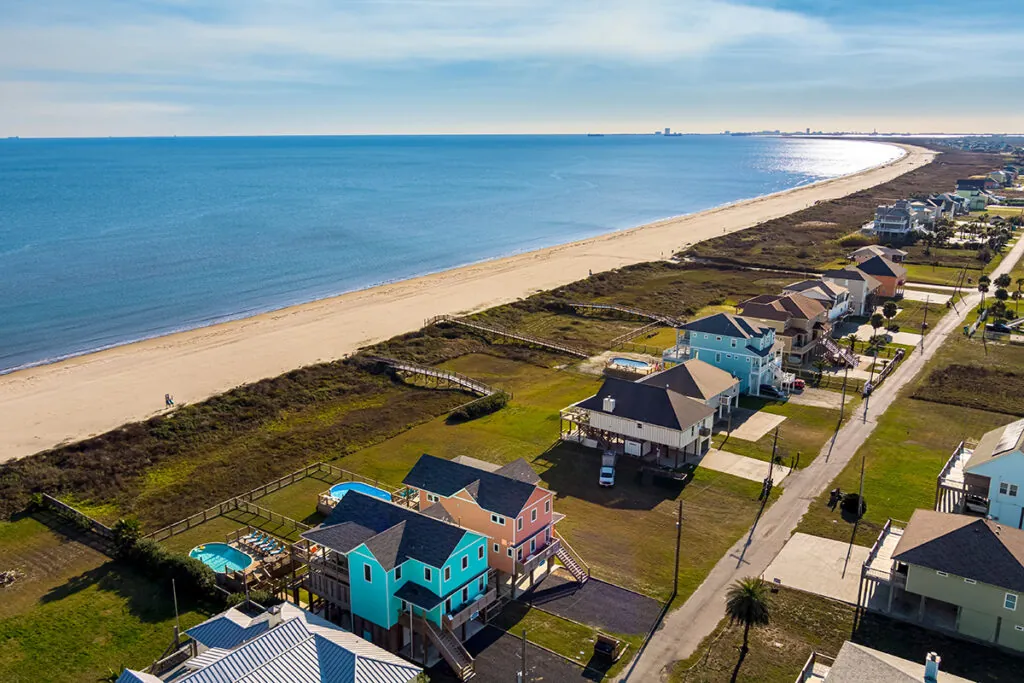
I’ll be honest: before I became a property manager, I was a homeowner asking myself the same question most of you have probably asked at some point. Is my home actually earning what it should be? When I ran the numbers honestly, the answer was usually no.
That’s the conversation I want to have here. If you’re a homeowner on the Bolivar Peninsula reading this at 11 PM because you’re quietly frustrated with your current manager — or quietly wondering whether you should be — I’d rather be direct than pitch you anything.
Here’s the short version of what I’ve learned running this business: the gap between a well-managed beach house on the peninsula and a typical one is not a small gap. It’s a different business entirely.
The Hidden Cost of “Good Enough”
Most property management companies optimize for simplicity, not for your revenue. Static rates are simple. Filling a calendar at whatever price gets a booking is simple. Sending you a statement at the end of the month is simple.
What’s not simple is the kind of revenue management that actually moves the needle. The industry data is unambiguous: properties using sophisticated dynamic pricing consistently outperform flat-rate listings by 23% in total annual revenue. A separate Beyond Pricing study found that hosts who moved to dynamic pricing saw an average revenue lift of 30%.
Thirty percent. On a property earning $80,000 a year, that’s $24,000 sitting on the table. Compounded over five years with even modest market growth, you’re well past $50,000 in revenue you never saw.
Dynamic Pricing Is Not Just Software
Dynamic pricing software — Wheelhouse, PriceLabs — is table stakes. Every serious manager has it. The difference is what you do with it.
Our in-house revenue team doesn’t just set the software loose on your calendar. They review your property’s booking pace, gap nights, and competitive positioning every single week. They catch what algorithms miss — a Jeep Weekend announced late, a block of school holidays booking faster than expected, a ferry outage that compresses demand. They adjust. They act.
Technology without human oversight is automation. Automation doesn’t know your home.
What this looks like in practice: rates adjust daily based on demand signals, local events, and competitor behavior. Every gap night gets a specific strategy — not a blanket discount. Peak weekends are priced to capture maximum value without sacrificing surrounding weekdays. Your approved minimum rate is protected. Always. No exceptions.
Why Occupancy Alone Is a Trap
A mistake I see property managers make constantly: they optimize for occupancy as if it’s the only number that matters. ‘Your home was booked 80% of the time!’ sounds great until you realize it was booked at rates that left significant money on the table during peak holidays.
The real goal is total annual revenue. That means being strategic about when to fill calendar gaps, when to hold firm for premium rates, and when a slower week in February actually protects your visibility and review velocity for the season ahead.
What This Looks Like When It’s Working
Let me ground this in a specific moment, because it matters.
The fall and winter of 2025 were brutal on the Texas coast. Galveston hotel occupancy was down nearly 50% year-over-year. Broader peninsula demand was the softest it had been in years. Every property manager in the region was sending the same apology email to homeowners.
We decided to do the opposite. In December, while most of our competitors were closing out the year, I spent a week with our team finalizing a 2026 offensive plan — and we launched a flexible cancellation program called Flex Protect that most of the industry still doesn’t offer. We built it for two reasons:
(1) to give guests the flexibility they increasingly expect, which measurably increases bookings, and (2) to do it in a way that does not put your rental income at risk. If you want the full mechanics of how we pulled that off without transferring the risk to you, that’s a conversation I’d rather have directly — reach out and I’ll walk you through it.
Here’s what happened next, across our portfolio — the same properties, in the same soft market, with the same homeowners:
• Bookings in January 2026 were up 45% year-over-year, including homes that had previously been managed by Vacasa.
• 78% of those reservations booked at the same rate or higher than the same time last year, despite broader market pressure.
• Most of the new bookings were for March and beyond — meaning guests were committing earlier and filling calendars sooner into peak season.
Against the peninsula market more broadly, our portfolio consistently runs: occupancy materially above the peninsula market average — especially in shoulder and peak seasons; ADR and RevPAR outperformance that compounds in peak season; above-market revenue even in the softest quarters.
I won’t publish our internal absolute dollar figures in a blog post — because those numbers are yours the moment you join us, and because I’m not going to hand competitors a roadmap to our pricing. What I will do is sit down on a phone call, pull up your specific home’s comparables, and show you exactly what your property could be earning under active management.
Why Any Of This Is Possible
None of the results above are accidental, and they’re not a product of a national corporate playbook. They’re the output of a setup that’s unusual in this industry:
• A locally-owned operator (me) who still thinks like a homeowner because I still am one.
• An in-house revenue team making daily pricing decisions, not a third-party algorithm set-and-forget.
• An in-house marketing team that sends 1–3 targeted campaigns per month to our guest database and runs dedicated pushes around holidays, local events, and special occasions.
• A 30+ person local team on the peninsula — cleaners, inspectors, maintenance, housekeeping leadership — backed by 24/7 virtual support.
• A centralized Homeowner Support function so you have one number to call and always get an answer, instead of chasing a single rep across voicemails.
That’s the operating system behind the numbers. It’s harder to build than a software license. It’s also the reason the numbers keep showing up.
If You’d Like To See Your Number
If you’re a homeowner who’s been quietly wondering whether your property is earning what it should, I’d genuinely like to run the numbers with you. Bring your last 12 months of owner statements, and in about 20 minutes I can show you — based on your exact home, your exact comps, and our exact portfolio performance — where the gap is. No pressure, no sales pitch you can’t opt out of. Just an honest number.
— Felipe Caldeira, CEO & Managing Partner, www.bolivarvacations.com | www.casagosanantonio.com